
As of the end of last year, only a handful of U.S. Marine Corps teams had completed training on first-person-view attack drones. A one-off purchase of 3,200 Neros Archer drones was planned for 2026. That stood in stark contrast to the scale of the technological war two time zones to the east, where Ukrainian and Russian forces were launching thousands of FPV drones every single day. So in December 2025, War Secretary Pete Hegseth unveiled the “Drone Dominance” program with a clear message: the United States would out-produce and out-innovate every rival in the small-drone space. Seven months and one completed Gauntlet later, the program’s winners’ list shows that American dominance still has a long road ahead — one on which the Pentagon is currently playing catch-up.
A Program Built on Urgency
Drone Dominance is a two-year, $1.1 billion initiative jointly run by the Test Resource Management Center and the Defense Innovation Unit, with contracting authority held by Naval Surface Warfare Center Crane. Its structure is unusual for the Pentagon: instead of a traditional multi-year proposal cycle, the program runs four sequential “Gauntlet” competitions roughly six months apart, each ending in fixed-price prototype orders for whichever supplier scores highest in live operator testing.
By 2027, the Department wants more than 200,000 lethal small drones in the hands of American units, with unit costs falling from roughly $5,000 today to a $2,000 target by the program’s final phase. These figures aren’t abstract: officials have repeatedly pointed to the war in Ukraine, where cheap FPV drones have become the defining weapon of the battlefield, and to warnings that China controls the overwhelming majority of the global small-drone supply chain.
Increasing FPV purchases by two orders of magnitude is an ambitious goal. Yet Drone Dominance’s entire two-year procurement plan still amounts to roughly one or two months of wartime drone use by either side in the Russia-Ukraine war. That gives a clear sense of the scale of the gap the program is trying to close.
Gauntlet I ran at Fort Benning in February and March 2026. Twenty-five vendors competed; eleven won orders for 30,000 attack drones worth roughly $150 million. Gauntlet II is now underway — 19 companies have been invited to trials at Fort Carson in August 2026, where orders for another 60,000 systems will be decided.
“One Winner Is Ukrainian on Paper. Most of the Leaderboard Is Ukrainian Underneath.”
Formally, only one Gauntlet I winner is Ukrainian. But look one level deeper, and Ukrainian design, capital, expertise, or battlefield validation can be traced in most of the field:
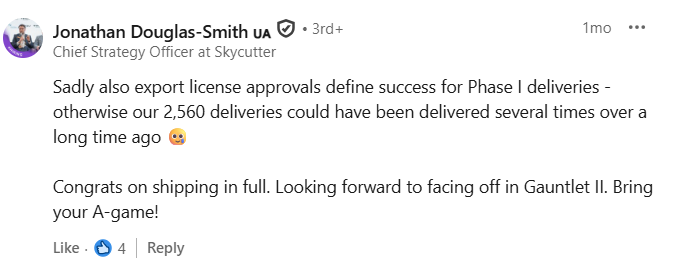
Skycutter (1st place, 2,560 drones) is a British company. Its winning drone, the Shrike 10 Fiber, was developed jointly with the Ukrainian manufacturer SkyFall. It’s the clearest case of a foreign wrapper over Ukrainian internals: a British brand, a Ukrainian design partner. Despite having a sufficient industrial base, Skycutter ended up near the bottom of Drone Dominance’s rankings for production ramp-up speed; a company representative explained this by pointing to a problem obtaining an export license — Kyiv only introduced a simplified export mechanism for weapons and military technology to partner countries in early July.
Neros (2nd place, 2,400 drones), an American startup, had no such licensing problems with its Archer FPV drones, already familiar to U.S. Marines. Still, the story of this thoroughly American drone is tied to Ukraine as well. Archer prototypes underwent combat testing in Ukraine starting in September 2023, with engineering updates continuously incorporated based on feedback from Ukrainian troops.
Low-profile U.S. defense contractor Napatree Technology (3rd place, 2,320 drones) took a different path. The company has a better-known alter ego — the American-Ukrainian defense venture Project Eagle, tied to former Google CEO Eric Schmidt. Napatree can be described as an American company built on the foundation of early, direct investment in Ukraine’s drone ecosystem. An indirect sign of the Ukrainian origins of its product was a similar delivery delay, tied to that same pre-July Ukrainian export bottleneck.
ModalAI (4th place, 2,240 drones) likely gained its edge through onboard artificial intelligence that requires less pilot training. It’s the first company in the leaderboard’s top tier for which there’s no available information about combat testing of its product. ModalAI, however, likely faces challenges with production speed. To remain in the program, each finalist had to deliver 120 drones fitted with combat payloads within roughly five weeks. While Neros had already shipped its entire batch, ModalAI delivered the bare minimum needed to stay in the running.
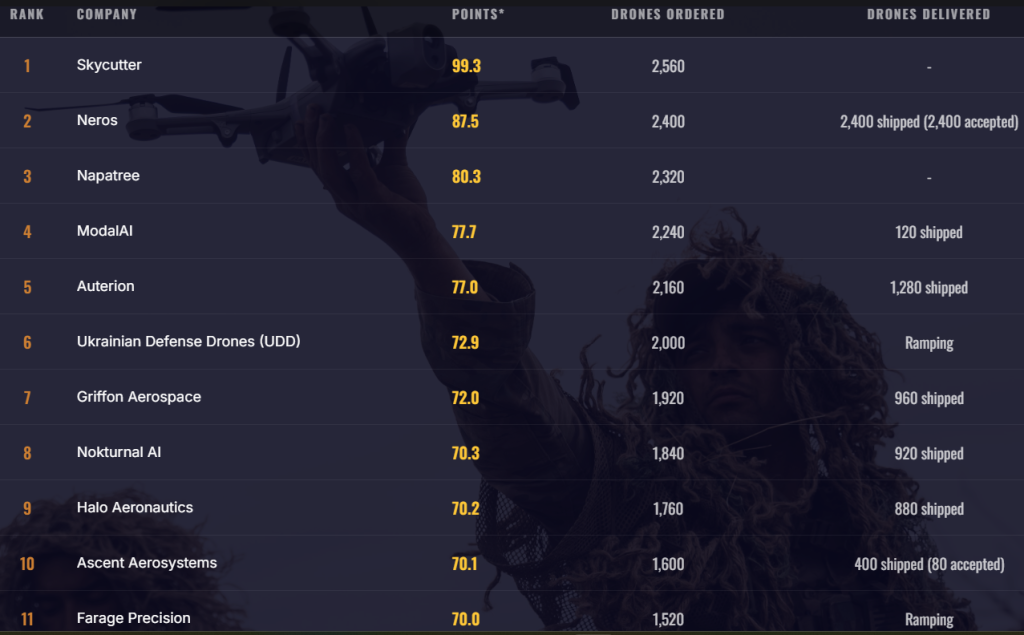
Drone Dominance leaderboard. Screenshot from 07/10/2026
Swiss-rooted, U.S.-headquartered Auterion (5th place, 2,160 drones) showcased at Gauntlet I its SLM-10 drone, combat-tested on the battlefield in Ukraine. The company also formed a joint venture in 2026 with Ukraine’s Airlogix to scale up production of heavy, medium-range, AI-guided autonomous strike drones incorporating Ukrainian engineering solutions.
Ukrainian Defense Drones (UDD) (6th place, 2,000 drones) is the U.S. company representing Ukraine’s F-Drones — the only one of the eleven winners that competes openly under a Ukrainian flag rather than behind an unrelated foreign or domestic brand. It fields F-Drones’ combat-proven F10 platform. It’s worth noting that American manufacturers delivered their drones in batches, gradually ramping up production, while UDD shipped its entire order of FPVs at once.
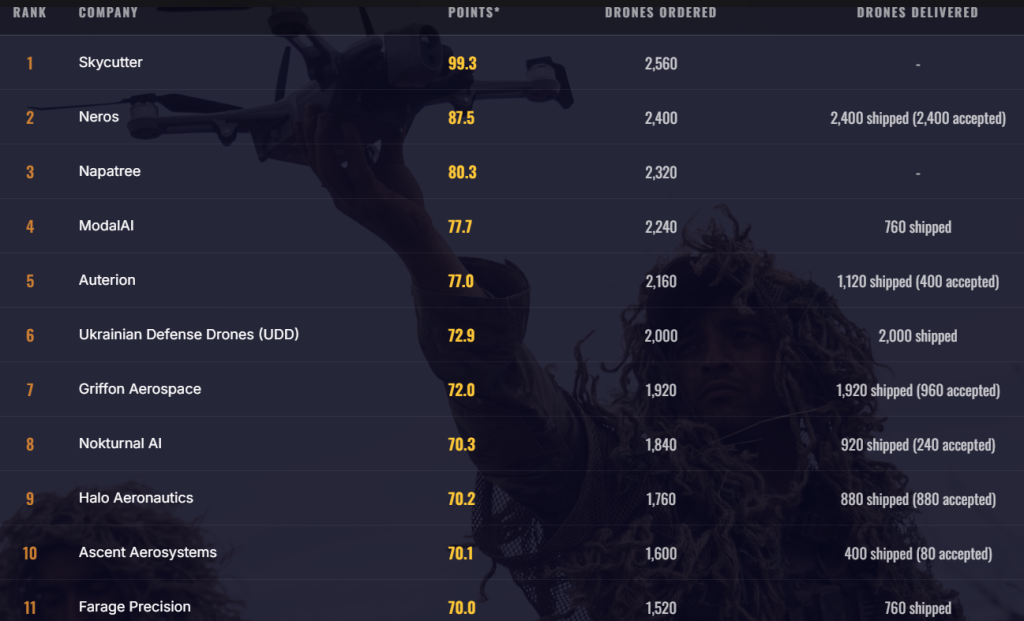
Drone Dominance leaderboard. Screenshot from 07/28/2026
American company Griffon Aerospace (7th place, 1,920 drones) developed its Scourge drone jointly with Georgia-based Kinetic Frames. Scourge is the company’s first quadcopter SUAS project. Griffon Aerospace’s Drone Dominance program lead, Daniel Beck, said the company is providing the military with combat-tested FPV solutions.
Nokturnal AI (8th place, 1,840 drones) is publicly documented as the American seller of the Nightmare drone, which is actually built by the Danish company Renegade UXS; the two companies hold separate Blue UAS certifications for what is functionally the same aircraft. Renegade UXS, in turn, has manufacturing partnerships in Ukraine and supplies strike FPV drones to Ukraine’s Ministry of Defense.
Halo Aeronautics (9th place, 1,760 drones) is a joint venture between IT company By Light Professional IT Services and UAS design and manufacturing startup Hush Aerospace. However, the company no longer appears among those invited to Gauntlet II. In its place is a new entrant, ORQA US LLC, formed in May 2026 through a strategic partnership between By Light and Croatian firm Orqa FPV. Orqa U.S. has said it will bring to the American defense industrial base experience with drones “tested on Europe’s harshest battlefields.”
Ascent AeroSystems (10th place, 1,600 drones) was founded in 2014 and acquired by Robinson Helicopter Company in April 2024. The company already holds U.S. military R&D contracts, but the commercial price of its Spirit drone starts at $9,995 — well above Drone Dominance’s cost targets.
Farage Precision (11th place, 1,520 drones) has no FPV manufacturing experience of its own. Its winning “Overkill FPV” drone is built by Taiwanese manufacturer Thunder Tiger Technology in partnership with Farage. The airframe is manufactured in Taiwan; communications modules, batteries, and flight-control units come from Taiwan’s local industrial base, motors are supplied from the United States, and the electro-optical sensors combine Taiwanese and Western components.
The Pace Problem and Supply Chains
Of the eleven Gauntlet I winners, only two existed before 2013; the rest have a two- or three-year history. Yet Drone Dominance isn’t launching from an empty industrial base — a working layer of small American FPV and UAS manufacturers already exists for the program to build on.
Even so, the program is still moving too slowly. At a March 5, 2026 hearing of the Senate Armed Services Committee following Gauntlet I, program officials called the six-month interval between Gauntlets aggressive by Pentagon standards. Democratic Senator Jeanne Shaheen countered that Ukrainian manufacturers modify their designs roughly every two weeks under wartime pressure — more than ten times faster than the Pentagon’s fastest cycle to date.
Supply chains are also shifting rapidly. An analysis by Kyiv’s Snake Island Institute found that the share of Chinese-made components in Ukraine’s own drone industry fell from about 90 percent to 38 percent between early 2024 and mid-2025. With each Gauntlet stage, NDAA compliance requirements tighten further, pushing manufacturers to fold combat-tested designs into allied supply chains without sacrificing the performance that won them their contracts in the first place.
Rebuilding a motor and battery supply chain independent of China, at the price points and volumes the program demands, is a multi-year industrial challenge that no Gauntlet can shortcut — and it may be the real race hiding behind the program’s name.
The Institution Really Is Moving Fast
Despite all the difficulties, the pace at which Drone Dominance is being implemented is genuinely fast, given the military bureaucracy involved.
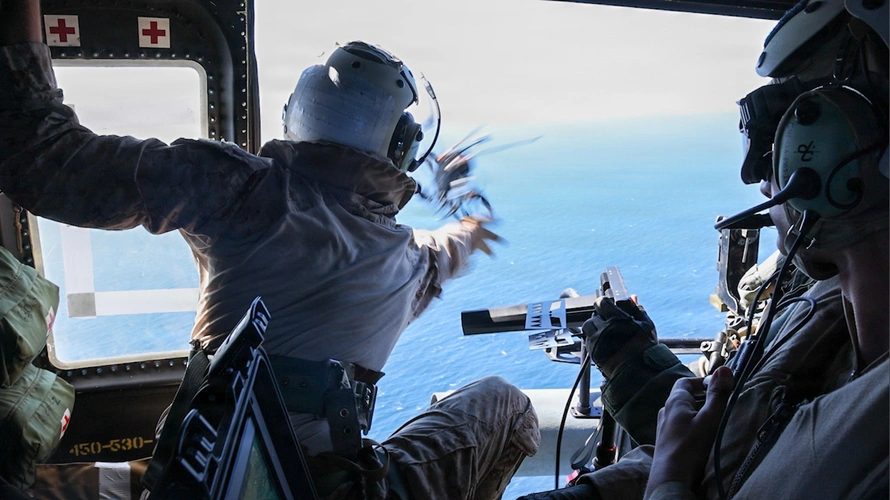
Neros was the first Gauntlet I winner to begin delivering its Archer FPVs. The government hadn’t even finished accepting all the drones from the manufacturer when, in late May, soldiers from the 7th Infantry Division already field-tested the Archer during live-fire exercises at Joint Base Lewis-McChord. And on June 16, U.S. Marines with 3rd Light Armored Reconnaissance experimented with dropping FPV drones from a UH-1Y Venom helicopter at Camp Pendleton.
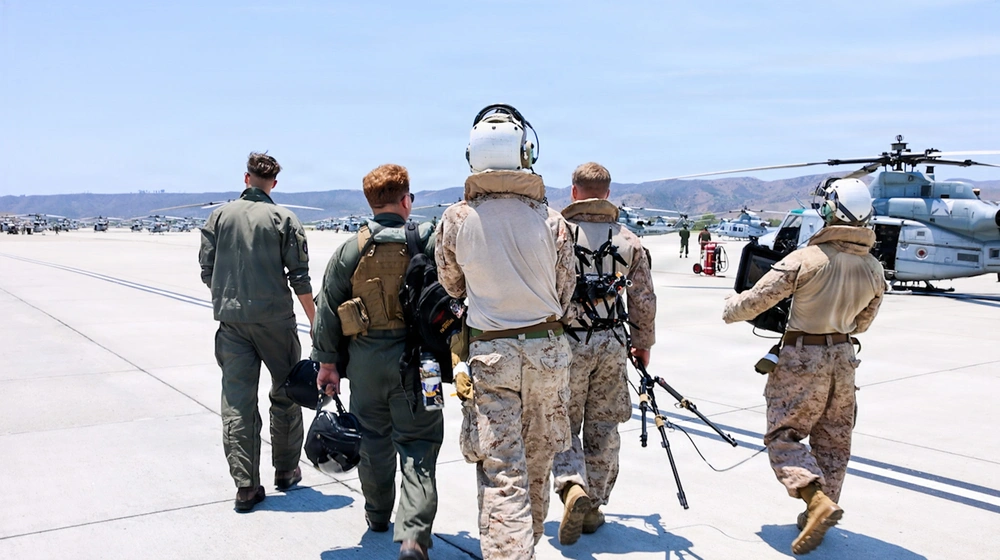
U.S. Marines experimented with dropping FPV from a UH-1Y Venom helicopter
On July 1, 2026, the War Department announced a comprehensive consolidation of all unmanned and autonomous systems under a newly created position reporting directly to the Deputy Secretary of War.
“Drones and autonomous systems represent the most consequential battlefield innovation of this generation… Adversaries collectively produce millions of unmanned systems each year across all domains. While global military production has skyrocketed over the last three years, the United States must move at the speed this moment demands to field these capabilities at scale and secure our tactical and strategic edge,” said Chief Pentagon Spokesman Sean Parnell.
Drone Valley in Ohio
Ohio has a real chance to become the Silicon Valley of unmanned systems. In March 2026, the first production line at Anduril Industries’ Arsenal-1 gigafactory went online. Located in Pickaway County, the plant builds the Air Force’s FQ-44 (Fury) drone.
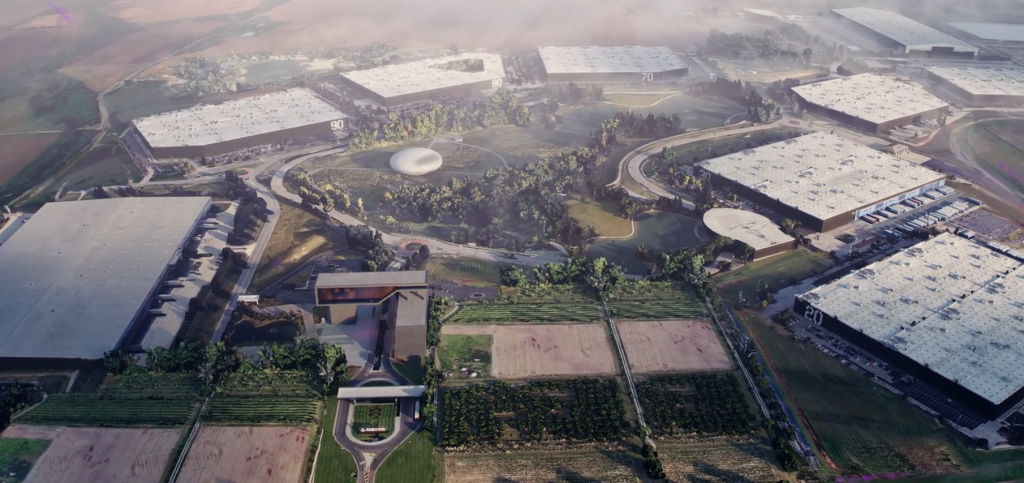
Arsenal-1 – hyperscale manufacturing Anduril Industries in Ohio
In late May 2026, Taiwan’s Thunder Tiger — the company behind Farage Precision’s winning drone — announced plans to expand its own manufacturing capacity in Ohio, where it operates a production line building drone motors.
In June, another Drone Dominance winner, Ukrainian Defense Drones, announced it would build a drone manufacturing and assembly plant in the village of Holland, Lucas County. At the announcement, Rep. Marcy Kaptur said she was introducing bipartisan legislation on strategic partnership in unmanned systems, specifically to formalize continued U.S.–Ukraine cooperation on drones. F-Drones CEO Stas Khutor described the move as sharing three years of wartime-refined technology with an ally, rather than simply licensing a product. And U2D2 chairman Rear Admiral (Ret.) Michael Hewitt noted that his organization is separately helping more than a dozen Ukrainian and Eastern European manufacturers — together producing over 10,000 drones a day — pursue entry into Drone Dominance, with UDD’s Ohio plant described as “just the beginning.”
Congress doesn’t typically draft bespoke partnership legislation for an ordinary vendor relationship. By all appearances, Ukrainian companies are being drawn into the U.S. market because Washington views continued access to Ukrainian combat experience as an urgent necessity — not merely as supply-chain diversification.
What “Dominance” Actually Means Here
The mismatch between Drone Dominance’s ambitious name and today’s reality doesn’t mean the program has failed or been poorly designed. Its very structure is a rare example of the Pentagon behaving as though it understands its own weakness: fast fixed-price orders, public leaderboards, warfighter-driven scoring, and explicit openness to allied suppliers, rather than insisting the technology be reinvented domestically before it can be bought.
The speed of adoption since Gauntlet I — live-fire validation within a quarter, a new portfolio office, factories breaking ground within months of a contract — is real, and it’s a more honest and more competent response to falling behind than most defense procurement efforts manage.
It’s hard to call the current situation “dominance.” It would be more accurate to call Drone Dominance a fast, well-funded catch-up manufacturing campaign that remains substantially dependent on outside expertise and decisions.
The clearest acknowledgment of that dependence came from the very top. At the NATO summit in Ankara on July 8, 2026, President Trump said the United States would buy drones directly from Ukraine, telling reporters Ukrainian companies “have the ability to produce them in very large quantities, which is extremely impressive”.
The harder test — converting borrowed and partnered designs into a genuinely domestic, China-independent supply chain at scale — is still ahead, and it will be decided in Gauntlets II through IV, not in press releases.